Alex Mugova, MASAP Team Leader
From 16-18 June 2026, along with our Project Director Kristina Mastroianni, I represented MASAP at the Donor Committee for Enterprise Development (DCED) Global Seminar in Nairobi. The event provided us with the opportunity to interact with and learn from DCED members and the wider market systems development (MSD), private sector development (PSD) and enterprise development (ED) community from across the globe, including practitioners, policy makers and donors. One of the objectives of the Seminar was to examine the effects of the shifting global aid landscape and the adjustments required so that MSD, PSD and ED projects remain relevant and impactful.
At one of the breakout sessions, I gave a presentation which focused on MASAP’s work in the policy space, highlighting the progress made to date working in close collaboration with the Seed Control and Certification Institute (SCCI) in Zambia and the Ministry of Agriculture, Mechanisation and Water Resources Development in Zimbabwe. In both countries, MASAP is supporting the development of national seed policies which, among other aspects, are expected to recognise and allow the registration and commercial trading of Farmer Managed Seed Systems (FMSS). Wide availability of high-quality FMSS will reduce mono-cropping and increase resilience to climate change, especially among resource-constrained smallholder farmers.
The goal of MASAP’s work in the policy space is improved livelihood resilience for smallholder farmers, with a specific focus on women, through stronger and more effective climate-resilient seed and commodity value chains for traditional grains (sorghum and millet) and legumes (cowpea and groundnut). Both Zimbabwe and Zambia have dual seed systems: world-class formal sectors and informal but resilient FMSS, where MASAP focuses on addressing the challenges of FMSS not being recognised or registered, having limited commercial trading avenues, contributing to monocropping (being dominated by maize hybrids) with consequent negative impacts on soil health and fertility, nutrition, dietary diversity, and resilience to climate change.
Demand for seed policy reform in both Zambia and Zimbabwe – and the need for evidence on the commercial value of traditional crops and the efficacy of FMSS – have come from a range of actors that includes farmers, seed certification institutes and the ministries of agriculture. In response, MASAP has conducted action research to generate the required evidence and is supporting the ministries of agriculture in the two countries to own and drive the seed policies reform agenda.
Thus far in Zambia, following country-wide stakeholder consultations, an amendment of the Plant Varieties and Seeds Act is expected to take place in the last quarter of 2026. In the near future, the project aims to support the Ministry of Agriculture to set up and guide the activities of the National Seed Working Group which will facilitate the development of a National Seed Policy. In Zimbabwe, a National Seed Working Group (including farmers, Zimbabwe Seed Association, government departments, seed companies and agro-dealers) is already at work. Country-wide stakeholder consultations were recently concluded, and a report was produced. The findings and results are being used to prepare a National Seed Plan which is expected to be completed in the last quarter of 2026.
Once FMSS get recognised and registered – and are commercially traded on the open market – major systemic changes are expected in the seed markets in Zambia and Zimbabwe. These include reduced mono-cropping, and increased crop diversity, climate resilience and financial flows among community-owned and small seed companies. A key message coming out of MASAP’s experience in the policy space is that reforms which are owned and driven by relevant public institutions and other key stakeholders (e.g., farmers, seed companies and seed associations) are likely to get implemented and sustained.
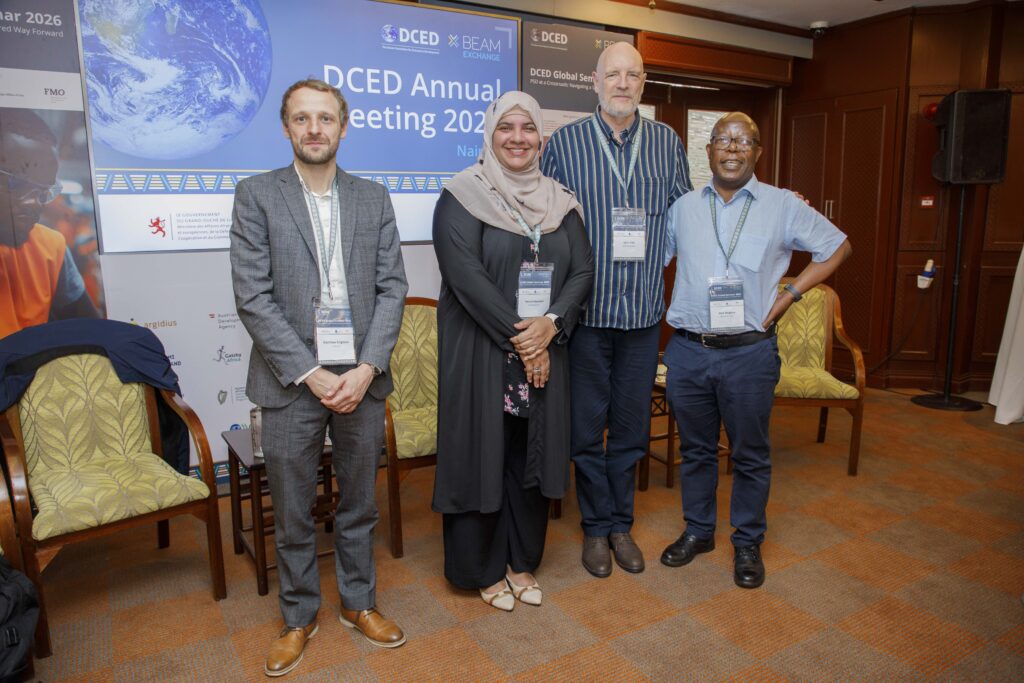
MASAP’s approach to supporting the development of seed policies in Zambia and Zimbabwe attracted the attention of the 40 or so participants who attended the policy session at the DCED Global Seminar, which also included presentations by Fouzia Nasreen and Matthew Crighton. Fouzia made a presentation highlighting the work being done to support policy reform in the chars market in Bangladesh, while Matthew’s presentation focused on policy reforms being implemented to improve the logistics market and trade efficiency in Ethiopia.
Following the presentation and discussions during the policy session, further conversations were held with two participants from the ILO: Merten Sievers based at ILO Headquarters in Geneva and Jens Dyring Christensen from the ILO Office in Pretoria, South Africa. Observing that MASAP’s approach in supporting seed policy reform in Zambia and Zimbabwe seems to be achieving the desired outcomes, the two expressed interest in setting up opportunities for ILO field staff to learn from the MASAP approach. At MASAP, we certainly welcome such interactions with other organisations as this facilitates sharing and learning among practitioners, policy makers and donors in the MSD, PSD and ED fields.
From L to R: Matthew Crighton (Logistics Markets Reform Project, Ethiopia), Fouzia Nasreen (M4C Project, Bangladesh), Mike Albu (DCED Secretariat and policy session facilitator) and Alex Mugova (MASAP Team Leader, Zambia and Zimbabwe)